

The Best Espresso Machines For Home
It's important to remember that different models have advantages regardless of whether you're an experienced espresso enthusiast or a beginner. These could include a dual boiler, which allows you to create steam and make espresso simultaneously as well as more precise display and setting controls.
Making espresso at home can be a difficult process of weighing grinding, grinding and tamping your beans requires accuracy and attention to detail. Anything that helps make the process more reliable and less time-consuming is a plus.
Easy to Use
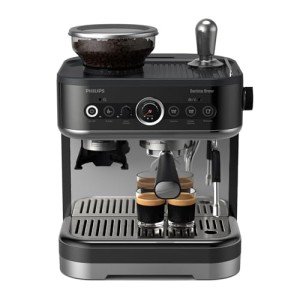
The top espresso machines for home use allow you to control every aspect of the brewing procedure. That means they have an adjustable PID controller that can be adjusted front and center to allow you to set the temperature of your water to a precise degree and a timer for each shot to inform you when your brew is done and a powerful steam wand for velvety milk and a simple-to-read pressure gauge that tells you if your shots are flowing at the correct extraction pressure.
Some machines go further than that. Super-automatic machines like the Jura ES8 and Nespresso Inissia will take care of everything. You grind the coffee beans, then tamp and then add them to the portafilter. Then you press the button, and wait. This type of machine is able to allow for the most experimentation, but is also the easiest to use. We did not include any of these machines in our tests.
Semiautomatic and manual machines require more effort. You'll have to grind the beans, then manually tamp them and place them in the portafilter before you press the button and wait for the espresso to be brewed. These machines are more difficult to operate and are generally more expensive than those that are super-automatic.
Some of our budget picks are retro-styled such as the Gaggia Classic Pro or its long-time rival, the Rancilio M V6. They don't feature advanced technology and have three plastic rocker switches that you turn to control the settings (on/off shots, on/off and steam mode). These machines are great for those who want to keep things simple and would like to make fantastic coffee at their home.
The De'Longhi EC155 packs all the features of an espresso and cappuccino maker inside a small 5.5-inch frame that doesn't take up the counter space as other models. It has the option of using espresso pods or coffee grounds as well as a 40-ounce reservoir that can be filled before making a brew, and a steam wand to make cappuccinos and Latte. It also has a built-in grinder and is easy to clean using hot, soapy water.
Ease of Cleaning
The 800 Series is Nespresso's newest and easiest to clean espresso machine. Its automatic cleaning process for the milk system as well as the brewing unit help keep your machine clean. Coffeee can choose to have the machine take out and descale your reservoir of water if you need to. It is still necessary to descale your boiler regularly. This involves flushing the boiler with a mix of water and a descaling fluid to get rid of any mineral deposits. You can use either distilled white vinegar or a descaling solution. The ratio recommended in the manual for your machine's owner will determine which method you choose.
It is also recommended to clean your portafilter and basket at least once per week. You can wipe it down or run some hot, soapy water through the steam wand after every use. This will help prevent the accumulation of coffee oils. Champion barista Nicole Battefeld-Montgomery says that even the most inexperienced palates can easily detect foul flavors from a dirty espresso maker.
Maintaining your espresso machine clean will not take much time however, you have to be consistent. You'll lose the flavor of your drinks and your espresso machine will not last as long.
To ensure that your espresso machine is ready for the next shot you must clean the portafilter and the basket after each use, and then purge it by using hot water following each brew cycle. After every use, you should also clean the drip tray as well as the steam wand. Don't forget to backflush your espresso machine at least every month using warm water and descaling agents. If you do not do this regularly, the minerals in your espresso machine can eventually cause it to overheat and disrupt its function. This could lead to an expensive repair bill or a poor tasting coffee. Therefore, invest the time into a regular cleaning schedule and your espresso machine will reward you with delicious drinks for many years to come. The result of a top espresso is a result of elements, including a great barista and good coffee and a well maintained machine.
Easy Maintenance
Whether you're a coffee aficionado or simply looking for a quick and convenient way to make espresso and other popular drinks in a coffeehouse, an espresso machine can give you that cafe experience at home. But before you invest in one, consider how much you're willing tinker with a machine which can be a bit finicky. Espresso brewing is a process that requires weighing the beans and grinding them correctly, tamping and then making the coffee at precisely the right temperature to get the desired results. Even if you know the basics, it could be an learning curve to make the most of your espresso machine.
The top espresso machines for home use can make the entire process simple and easy. The most basic models, like the Breville Bambino Plus and the Gaggia Classic Pro, are easy enough to be easy for beginners to the hobby. They are quick to heat up and come with the most powerful steam wand and pump that is powerful, and a simple-to-read digital display.
The more expensive machines usually have dual boilers that permit you to brew and steam simultaneously making it easier to make a variety of popular drinks. They allow for better control of the brewing and steaming processes, which is important for professional-grade coffee.
There are also semi-automatic and fully automated espresso machines that do most of the work for you. These can be expensive however they are perfect for those who are just beginning their journey and are looking to avoid the learning curve of manually operating a manual machine and those who prefer to drink their espresso at the touch of a button.
The best espresso machines have removable parts that can be machine-washed for simple and quick cleaning in between uses. Certain models come with removable water tanks that can be cleaned using hot soapy water to stop the accumulation of minerals. If you're a committed coffee drinker, you'll also need to think about how the machine is built and designed for serviceability; some are better than others in being opened up and repaired.
Repair Ease
Espresso machines pressurize hot water through finely ground coffee to create delicious, high-caffeinated drinks. They are among the most sought-after coffee-making appliances in homes, but like any other machine they can experience issues or faults as time passes. Regular maintenance will ensure that your espresso machine is in good working order for many years to come.
Whether you're looking to buy an espresso machine for the first time or want to make certain that your current machine is working properly, there are several things you should check regularly. If you notice water puddles or other signs of leakage in your espresso machine, it could be a sign of an issue with the gasket or steam valve. The machine is not heating or powering up If the machine doesn't start up, doesn't heat up, or turns on but does not brew, it could be an indication of a defective switch or heating element, or another electrical issue.
Uneven extraction: If you observe uneven extraction or weak brews, this could be caused by an issue with the group head or the tamping. Other indicators include a decrease in water pressure or a portafilter incorrectly positioned, or excessive tamping.
Descaling: Espresso machines that have boilers need to be regularly descaled. This is a process to remove calcium scale inside the boiler. The buildup of hard water deposits could alter the espresso pressure, causing shots to pull inconsistently, and, in the worst case blockages that are complete are expensive to fix. Running either a descaling solution, or dissolved tablet through the espresso maker will keep it in good working condition.
The quality of an espresso machine is largely determined by the manufacturer. However it also is influenced by the ease of the machine to use and maintain. We look for features that make it easier to grind, tamp, and load steam and espresso wands and also clean between uses. We also take a look at how easy it is to open a machine for routine maintenance or in the event of a post-warranty situation. Many espresso enthusiasts prefer to do this on their own instead of sending their machines off to technicians. We prefer models that permit users to open the machine without tools.